The mainstream pixel pitch for uncooled infrared detector is 12 μm, with the industry moving toward smaller pixel pitches. However, smaller pixels place greater demands on detection performance and image quality. Maintaining high-resolution thermal imaging as pixel pitch shrinks is key to large-scale adoption. Raytron launched the world’s first 8 μm uncooled infrared detector chip in 2021, with multiple 8 μm products now in mass production. This article explores how Raytron maintains high-resolution imaging with 8 μm pixel pitch.
Smaller Pixels, Greater Advantages: Size, Weight, and Cost
Smaller Size
At the same resolution: Smaller chip → smaller infrared detector → smaller thermal imaging module
At the same form factor: More pixels → higher spatial resolution
Lower Weight
Smaller chip + smaller lens + smaller PCB → lighter thermal imaging module
Lower Cost
Smaller pixel pitch → significantly smaller chip area → lower cost per detector chip
From 12 μm to 8 μm: What Makes Smaller Pixels So Challenging?
Reducing pixel pitch from 12 μm to 8 μm is far more than a simple geometric scaling. The pixel area is reduced to just 44% of its original size, creating significant challenges that are common across the industry:
Reduced photosensitive area can degrade detection performance.
Extremely dense circuit routing can increase signal crosstalk.
Uneven thermal distribution within microstructures can affect imaging stability.
How Raytron Overcomes the Challenges of Smaller Pixel Pitch
To address the challenges of smaller pixels, Raytron has pursued innovations across sensors, thermally sensitive materials, readout circuits, packaging, and manufacturing processes. These innovations help overcome the physical limitations of pixel miniaturization and advance high-resolution imaging across its 8 μm product portfolio.
Sensor: Breaking Through Miniaturization Limits
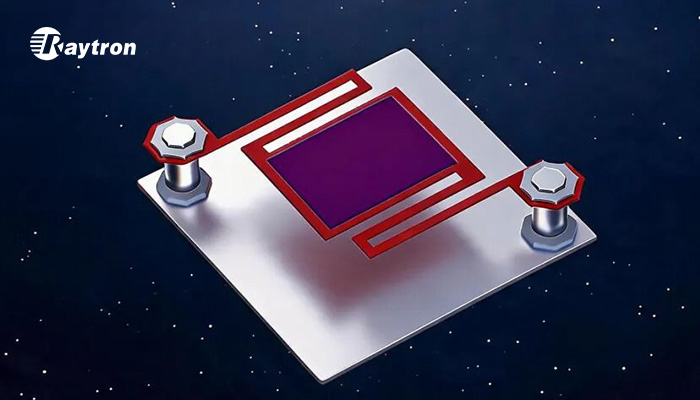
An in-house high-precision MEMS fabrication platform has enabled sub-micron manufacturing processes for critical microbridge structures. This high-precision process reduces the size of microbridge support structures, enabling a sensor structure with higher thermal sensitivity per unit area and helping compensate for the performance loss caused by the reduced photosensitive area.
Thermally Sensitive Materials: Advancing Thin-Film Growth
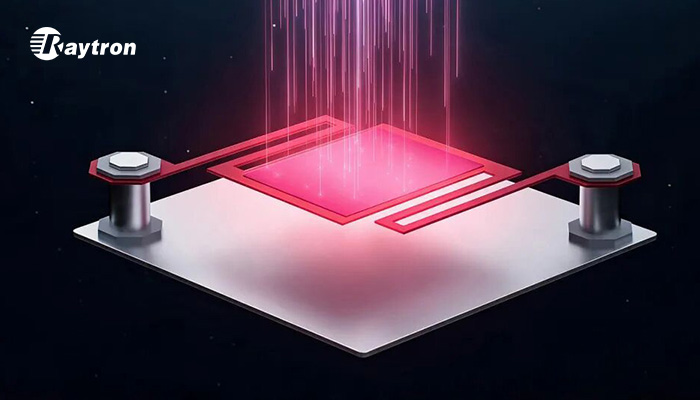
Thermally sensitive film growth processes have been continuously improved to optimize material noise characteristics and the temperature coefficient of resistance (TCR), improving image signal-to-noise ratio (SNR).
Readout Circuit (ROIC): Combining High Integration with High Performance
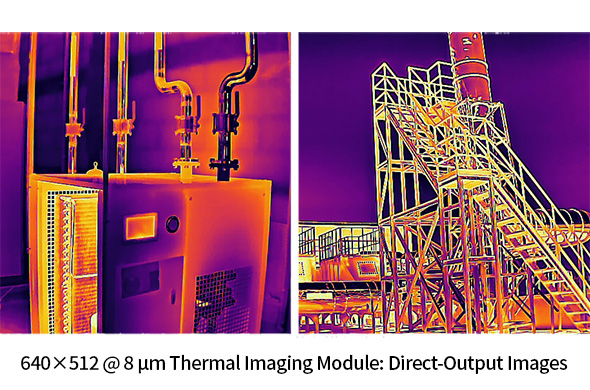
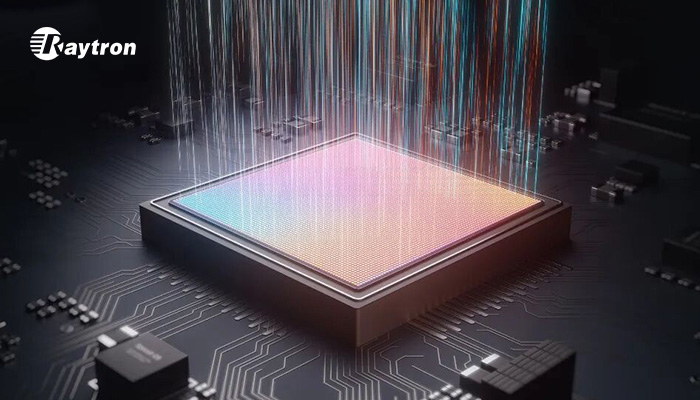
A full range of highly integrated ROICs has been developed for 8 μm pixel pitch detectors, with resolutions covering 640×512 and 1280×1024 to support high-resolution thermal imaging across different applications. The row-by-row readout mechanism has also been optimized, reducing rolling noise by 50% for cleaner images.
Packaging Technology: Enabling Diverse Solutions
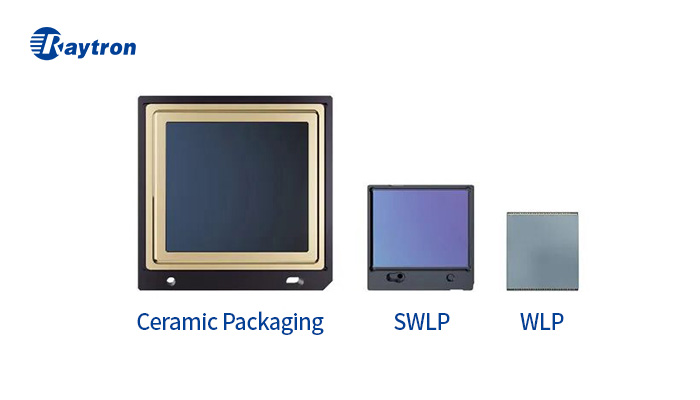
Multiple packaging options, including wafer-level packaging (WLP), compact ceramic packaging, and SWLP packaging for enhanced ease of integration, are available to meet different requirements for image quality and system integration.
Process Consistency and Scalability
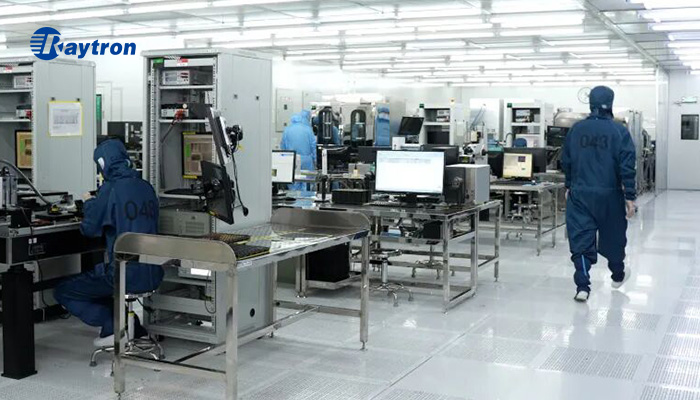
An in-house fabrication platform and coordinated optimization of front-end and back-end processes enable comprehensive control over the 8 μm sensor manufacturing process, helping improve detector yield and ensure stable, large-scale mass production.
The Next Generation of Infrared Detectors: Smaller, Lighter, and Higher-Resolution
With advantages in size, weight, and cost, 8 μm detectors have become an important choice for thermal imaging camera manufacturers and OEM customers. Raytron’s continued advances in 8 μm image quality further extend these advantages: smaller, lighter, and more cost-effective, while delivering higher image quality. These improvements can expand the application range of 8 μm infrared detectors—from applications where size, weight, and cost are key considerations to those with more demanding imaging requirements.
About Raytron
As a leading global supplier of core components and subsystems for multimodal sensing, Raytron provides end-to-end capabilities spanning chips, sensors, modules, complete systems, and application solutions. By integrating these capabilities across the entire development and manufacturing chain, Raytron delivers a full range of 8 μm uncooled infrared detector products with high-resolution imaging performance, providing customers with scalable solutions for different application requirements.