Low-light environments pose critical challenges for Search and Rescue (SAR). In dense forests, coastal environments, or mountainous terrain, temperature differences shift constantly, making it difficult to locate missing people with manual methods. Thermal imaging, which captures the heat emitted by any objects above -273℃, excels in these conditions by revealing thermal signatures even in total darkness. This adaptability enables rescuers to maintain high accuracy and reliability during nighttime search operations. Unlike traditional SAR tools, Raytron's infrared thermal cameras offer exceptional sensitivity, allowing SAR teams to locate victims within minutes, ultimately gaining valuable time for critical rescue efforts.
Thermal Night Vision Camera for Search and Rescue in Mountains
In expansive wilderness areas or rugged mountain terrain, thermal cameras provide rescuers with an efficient tool to detect human heat signatures against cooler natural backgrounds. When dense forests and rocky mountains hide lost hikers during nightfall, a handheld thermal camera can pinpoint missing people much faster than a flashlight or standard binoculars.A thermal monocular for SAQ rapidly scans expansive mountain and forest regions, pinpointing missing people with improved accuracy. 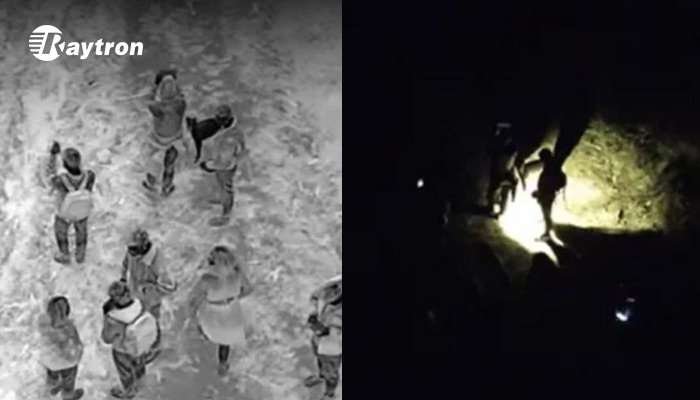
Beyond visual enhancement, thermal imaging provides continuous situational awareness across smoke, foliage, and complex terrain. Human heat signatures remain traceable even when the landscape appears uniform to the naked eye or optical sensors. For SAR teams, this helps reduce missed detections and enables more reliable tracking of moving targets. Infrared technology supports systematic area scanning, enabling teams to map thermal anomalies over large areas and prioritize zones with a higher probability of human presence.
SAR operations in autumn and winter often encounter reduced visibility, rapid temperature drops, and complex atmospheric interference. These challenge factors make the detection of human targets more time-consuming and less reliable. In these conditions, a thermal imaging camera provides more stable detection support because thermal contrast remains visible even when ambient light is limited. Cold surfaces such as rocks, snow, and vegetation tend to retain lower temperatures, allowing human heat signatures to stand out more clearly.
In an emergency search and rescue operation by Blue Sky Rescue (BSR), conventional search methods struggled significantly in the dark and complex terrain. At the critical moment, BSR rushed to the scene with Raytron's thermal imaging camera. With the help of infrared thermal imaging technology, rescuers quickly locked onto the heat source of the survivor. Eventually, they successfully rescued the missing person safely. Raytron, by sponsoring BSR, has transformed advanced technology into a life-saving force.
Thermal Night Vision Camera Technology for Maritime Rescue
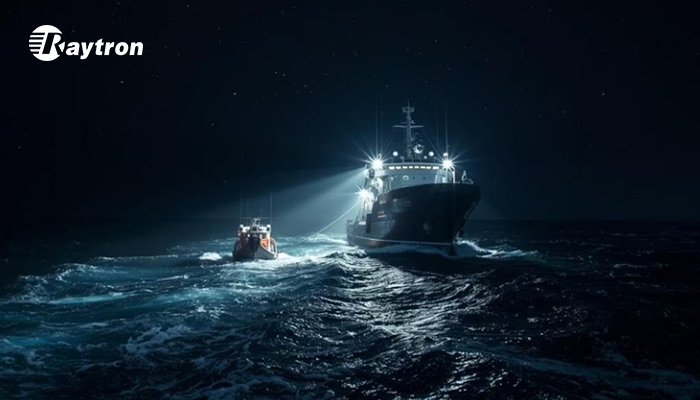
Thermal imaging also plays a critical role in the open water. Maritime rescue operations face even more challenges: on a dark, wave-tossed sea, even standard searchlights and radars have limitations. A High-resolution thermal imaging camera is therefore indispensable, enabling coast guards and boat crews to locate people in the water and navigate safely in zero-light conditions.
The sea surface often renders objects nearly invisible at night. Thermal cameras cut through this challenge by instantaneously detecting the heat signatures of living objects against the cooler water background. In man-overboard situations, where every second counts, a thermal camera will show a person’s outline against the cool ocean far sooner than a searchlight or traditional night vision camera could.
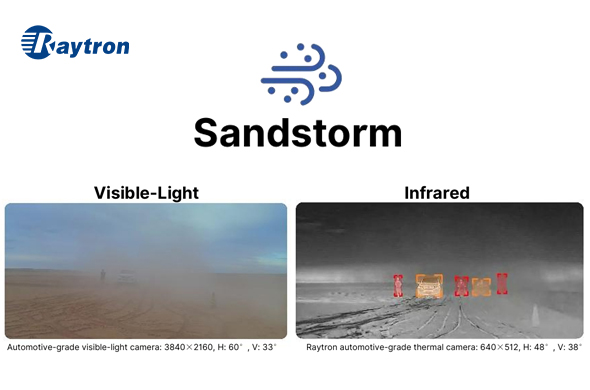
Fog, sea spray, and glare on the ocean can severely impede both visual observation and the effectiveness of artificial lights. Infrared thermal cameras, however, offer a distinct operational advantage as they rely on heat detection, allowing them to penetrate haze, glare, light smoke, or total darkness. For instance, a distressed vessel or a swimmer could be temporarily obscured by a wave crest, but their heat signatures will immediately appear on the thermal display.
Helicopters and patrol boats equipped with thermal cameras can coordinate to sweep search grids over water. A helicopter’s infrared camera might lock onto a survivor’s heat signature and then guide the nearest ship to the exact coordinates. In practice, this works as a coordinated use of night-vision and thermal imaging, with each technology covering the other’s limitations to improve overall performance. Overall, in maritime rescue, the night vision thermal imaging camera transforms the dark sea into a heat map. Crews can detect people or floating debris that would otherwise vanish in darkness. This improves the odds of finding survivors and enhances operational safety for the rescue teams themselves.
Raytron's Commitment to Community Safety and Environmental Stewardship
Thermal imaging has become a critical tool in modern search and rescue. From dense forests and snow-covered mountains to wide offshore environments, infrared cameras provide the clarity and situational awareness needed for SAR missions.
Raytron, a leader in infrared thermal imaging, delivers high-sensitivity sensors, modules, and integrated thermal imaging solutions that support reliable performance across demanding applications. Our technologies are widely used in industrial monitoring, security, gas detection, automotive thermal cameras, and outdoor SAR operations—helping partners enhance efficiency, strengthen safety, and unlock long-term value through continued innovation.