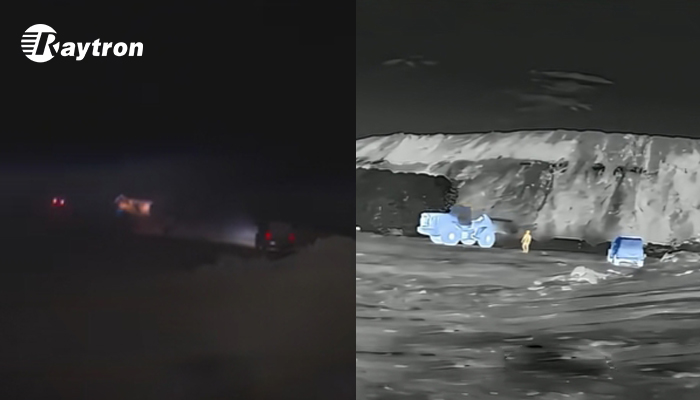
Raytron’s 8μm Uncooled Thermal Imaging Modules Enable Scalable Delivery and Wider Adoption
Uncooled thermal imaging modules, commonly known as thermal cores, are among the key components of the infrared industry. Technological advances in this field have a direct impact on the industry's development.
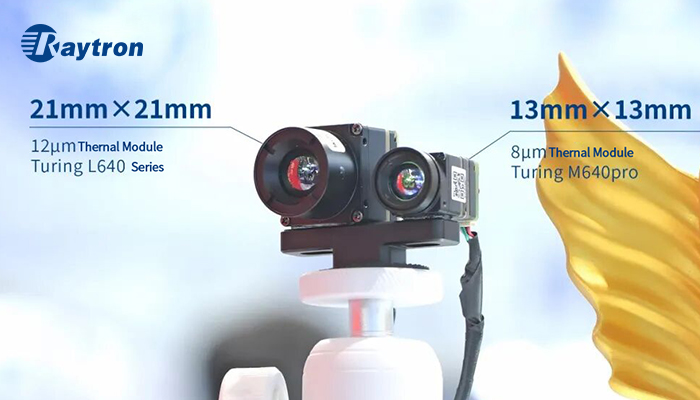
Nowadays, 12 μm pixel-pitch thermal modules remain the industry standard. The mass production of 8 μm products marks an important step towards smaller, lighter and more cost-effective thermal imaging solutions. Meanwhile, Raytron's Turing M640 Pro 8 μm uncooled thermal imaging module is now ready for large-scale delivery.
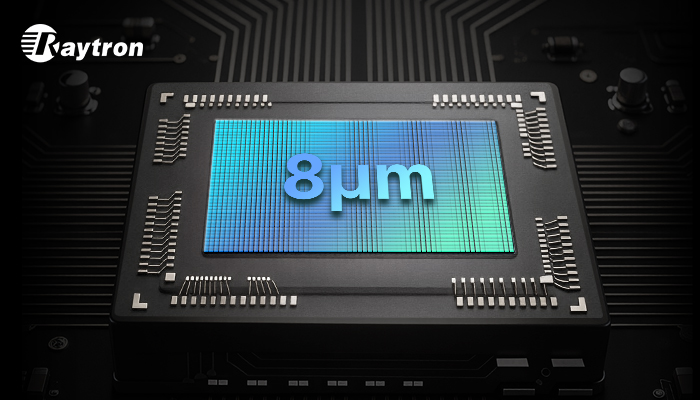
What is the advantage of Raytron uncooled thermal imaging module ?
Smaller Pixel Pitches: Where Market Demand Meets Technological Progress
At present, the infrared industry is moving towards more compact, lightweight products with smaller pixel pitches, driven by evolving application needs and advances in technology.
Emerging applications in consumer electronics, wearables and micro-UAVs are placing increasingly stringent demands on module size and weight, requiring keycap-sized modules weighing just a few grams. Smaller pixel pitches allow for smaller detector chips, which helps reduce the overall module footprint.
In addition, smaller pixel pitches provide higher pixel density. With the same chip size, an 8 μm pixel pitch delivers significantly more pixels than 12 μm, capturing finer temperature details and enabling high-precision thermal measurement for applications such as power inspection and industrial defect detection.
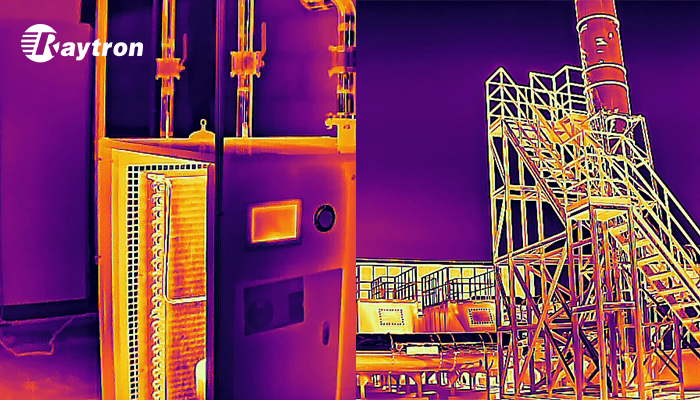
Pushing the Limits of 8 μm Pixel Technology
Raytron's Turing M640 Pro is an ultra-compact thermal imaging module with a 640 × 512 resolution and a wide temperature measurement range of -20°C to 650°C. Designed for commercial drones and industrial temperature measurement, it brings together advances in thermal imaging technology, compact design, and application versatility.
Equipped with Raytron's proprietary 8 μm, 640 × 512 infrared detector, the Turing M640 Pro features low-noise readout circuitry and small-pixel signal compensation. Its 8 μm pixel pitch delivers improved image quality in a more compact form factor, making it ideal for integration into space-constrained devices.
Advancing the Industry Through Innovation and Cost Efficiency
Compared with 12μm thermal modules of the same resolution, Raytron’s Turing M640 Pro is approximately 60% smaller in volume, accelerating the adoption of infrared modules in mass-market applications such as consumer electronics and smart homes. It also drives upgrades and fosters greater collaboration across the infrared supply chain, spanning infrared materials, optical lenses, and semiconductor packaging and testing.
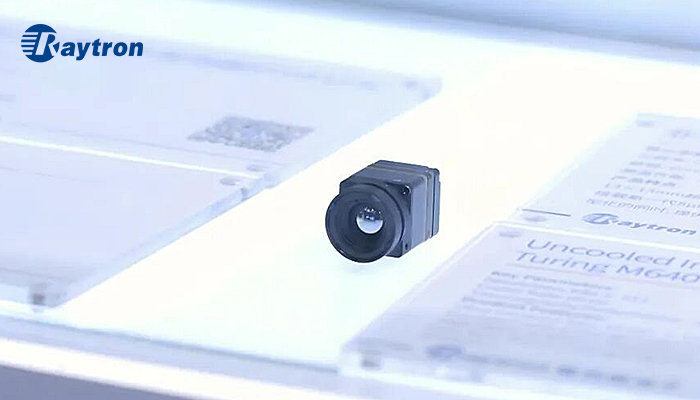
The Raytron M640 pushes the boundaries of SWaP performance. Measuring just 13 × 13 × 13.4 mm, weighing under 3.5 g, and drawing no more than 0.5 W, it delivers an exceptional combination of compactness, lightweight design, and power efficiency, raising the bar for thermal imaging modules. With minimal demands on space, weight, and power, the M640 allows greater flexibility in mechanical design and system integration, while facilitating faster product development and iteration.
Raytron thermal modules come standard with a range of practical features, including external synchronization, hot-spot detection and alarm, and selectable image modes. Custom super-resolution algorithms can also be developed to meet specific application requirements, helping customers reduce development time and accelerate time to market.
These capabilities are driving the industry toward a more integrated approach to module performance, encompassing size, weight, array resolution, image quality, and ease of use. They also place greater emphasis on key areas of technology development, including smaller pixel pitches, advanced semiconductor packaging, and low-power image processing algorithms.
Continued advances in MEMS fabrication, packaging technologies, and imaging algorithms are making thermal imaging modules smaller, more capable, and more affordable. As these technologies mature, thermal sensing will become accessible across a wider range of applications, extending infrared imaging beyond specialized professional markets into mainstream applications.