Raytron Unveils Industry-First BCoS Packaging for Smaller, Easier-to-Integrate Thermal Detectors
As thermal imaging expands beyond traditional industrial applications into consumer electronics, compact and lightweight infrared detectors are becoming increasingly important. Packaging technology plays a critical role in determining detector dimensions and integration complexity, directly influencing how easily thermal imaging can be incorporated into space-constrained products.

To address these challenges, Raytron unveils its industry-first BCoS (Bump Chip on Substrate) packaging solution, enabling slimmer detectors, more compact modules, and simpler assembly.
What is the difference between BCoS and WLP?
The new-packaging BCoS detector leverages advanced packaging technology to route electrical signals from the detector’s backside through a ball grid array (BGA), using through-silicon vias (TSVs), redistribution layers (RDLs), and metal bumps.
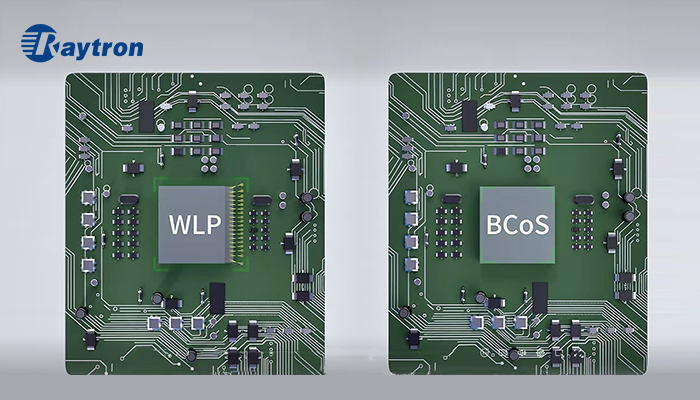
Raytron's BCoS packaging technology adopts advanced interconnect structures to route electrical signals from the detector's backside to a ball grid array (BGA). Through-silicon vias (TSVs), redistribution layers (RDLs), and metal bumps enable vertical electrical connections between the detector and the external printed circuit board (PCB).When connected to an external PCB, Raytron’s thermal detector can be assembled alongside other components through standard surface-mount technology (SMT), This eliminates the need for dedicated wire-bonding pad space, die bonding (DB), and wire bonding (WB), reducing module size and simplifying the assembly process.
Nowadays, Raytron’s BCoS (Bump Chip on Substrate) thermal detectors are available for small-batch customer deliveries.
What Are the Key Advantages of BCoS?
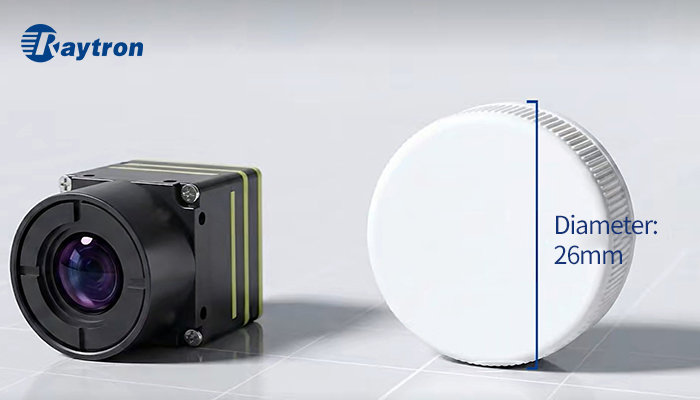
Slimmer Detectors, Greater Design Flexibility
At just 1.14 mm thick, the 256 × 192 @ 12 μm BCoS thermal detector is approximately 21% thinner than a WLP detector of the same specifications (1.455 mm). This allows for thinner, lighter end products, giving manufacturers greater design flexibility and a competitive edge in space-constrained markets such as portable devices and consumer electronics.
Ultra-Compact Modules, Easier Integration
With vertical interconnects, BCoS infrared detectors achieve direct electrical connection to the PCB without bonding pads—reducing the detector footprint by nearly 40% compared to traditional thermal modules.
Together with the ultra-thin detector design, both the width and depth of the module are minimized. That significant size reduction simplifies integration into space-critical applications, paving the way for thermal imaging to expand from industrial thermography and security into smart home ecosystems and consumer devices.
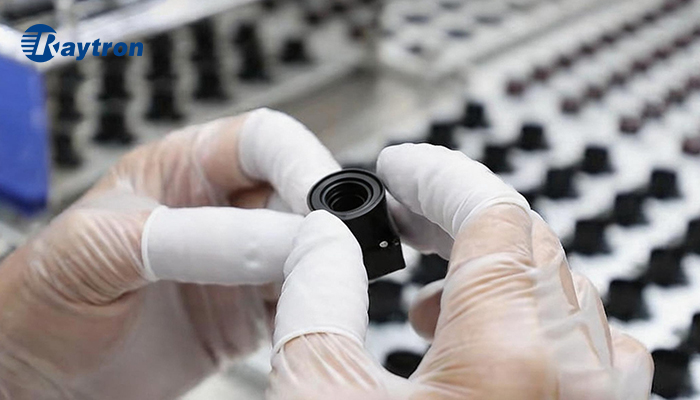
Simpler Assembly, Fewer Process Steps
Traditional WLP detectors require additional die bonding and wire bonding (DB & WB) processes, adding complexity to the manufacturing chain. In contrast, BCoS detectors can be surface-mounted alongside other standard components in a single SMT pass—achieving both mechanical fixing and electrical interconnection at once. Eliminating an entire process step reduces potential points of failure, lowering technical barriers and noticeably improving manufacturing yields.
Enabling the Next Generation of Compact Thermal Imaging
BCoS packaging is more than an innovation in packaging design, representing a new approach to extreme miniaturization. By streamlining integration, it ensures easier integration core components into portable devices, enabling infrared core to fit into more applications with smaller footprints and simpler manufacturing processes.

By combining a slimmer profile, a smaller footprint, and a streamlined assembly process, Raytron's BCoS technology helps manufacturers integrate infrared sensing into increasingly compact products, opening up new possibilities for thermal imaging across a broader range of applications.
As a global leader in infrared thermal imaging, Raytron remains committed to its mission: "To Create Incremental Value for Customers Through Technological Advancement."