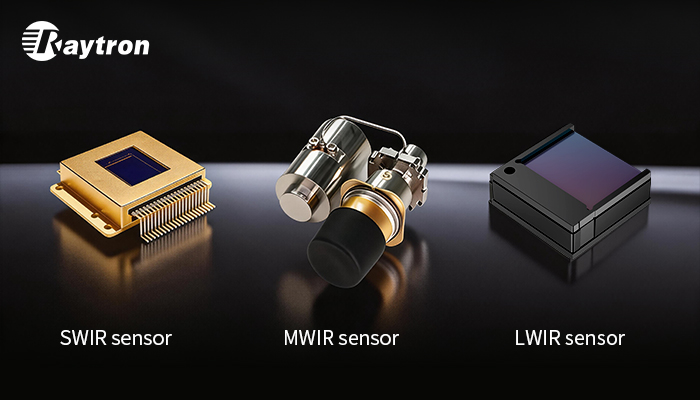
Most people associate infrared with temperature measurement and night vision. But infrared technology extends far beyond these familiar uses. Infrared is commonly divided into three widely used wavelength bands—short-wave infrared (SWIR), mid-wave infrared (MWIR), and long-wave infrared (LWIR). Each wavelength band has distinct physical characteristics and is suited to different applications.
For engineers selecting a thermal imaging camera sensor, understanding these differences is essential. The choice of SWIR, MWIR, or LWIR affects not only what a system can detect, but also its sensitivity, optical design, cooling requirements, power consumption, and overall system architecture.
This division is not arbitrary. It is governed by target physics and atmospheric transmission windows.
According to Wien's displacement law, the peak wavelength of blackbody radiation is inversely proportional to absolute temperature: λ_max ≈ 2898 / T (μm·K), where T is the temperature in kelvin (K). Human bodies and ambient-temperature targets at 20–40 °C (293–313 K) radiate most strongly near 9.3–9.9 μm, within the LWIR (8–14 μm) window. As target temperature increases, the peak shifts toward shorter wavelengths. At 300–500 °C (573–773 K), the peak moves toward the 3–5 μm MWIR range, making MWIR well suited to high-temperature targets such as engine exhaust and furnaces. By contrast, SWIR (0.9–1.7 μm) operates primarily on reflected light, with an imaging mechanism closer to visible-light cameras than conventional thermal imaging sensors.
Earth's atmosphere also provides two principal transmission windows at 3–5 μm and 8–14 μm. Therefore, infrared sensor selection is not a manufacturer's product-positioning decision. It is an answer dictated by target temperature, radiative physics, and atmospheric optics.
| Parameter | SWIR | MWIR | LWIR |
| Wavelength Range | 0.9 – 1.7 μm | 3 – 5 μm | 8 – 14 μm |
| Typical Material | InGaAs | InSb / MCT | VOx / a-Si |
| Cooling | Uncooled or TE-cooled | Stirling cryocooler (~77 K) | Uncooled |
| Typical NETD | N/A (reflected-light imaging) | < 20 mK | 30 – 50 mK |
| Typical Power | < 3 W | 10 – 20 W | < 1 W |
| Spatial Resolution | Highest (5 – 8 μm pixels) | Medium (15 – 30 μm) | Medium (12 – 17 μm) |
Among the three bands, the SWIR sensor is the only one that relies chiefly on reflected light. Its working principle is closer to a visible-light camera than to traditional thermal imaging. Its shorter wavelength makes smaller pixel pitches and high spatial resolution more readily achievable. Pixels can scale down to 5–8 μm, producing the richest image detail.
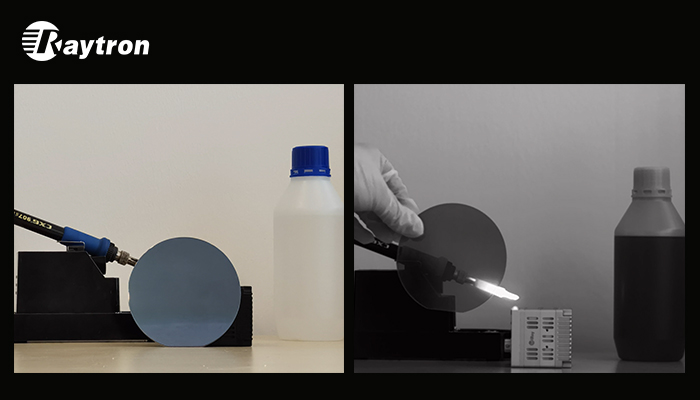
SWIR sensor imaging through glass (right) compared with visible light (left)
Silicon becomes semi-transparent in the SWIR band. This allows the sensor to see through silicon wafers and detect circuit defects beneath the surface. The trade-off is clear: without an external light source—such as a SWIR laser or night-sky illumination—the infrared sensor cannot detect ambient-temperature targets in total darkness.
This band excels at precise high-temperature capture. Engine exhaust plumes and industrial hot equipment show extreme contrast in MWIR. Sensitivity is outstanding, with NETD below 20 mK.
High-performance MWIR detectors often use active cooling to reduce detector noise. Depending on the detector material and architecture, operating temperatures can range from moderately cooled conditions to cryogenic temperatures. Stirling cryocoolers are widely used, although other cooling technologies are also available. This requirement stems from fundamental detector physics: at cryogenic temperatures, thermally generated dark current and noise are suppressed to levels that allow the faint 3–5 μm signal to be resolved above the noise floor.
MCT material adds a unique advantage: a tunable bandgap. The MWIR sensor can be tuned to match the 3.3 μm absorption peak of methane and other gases. This is the foundation of Optical Gas Imaging (OGI).
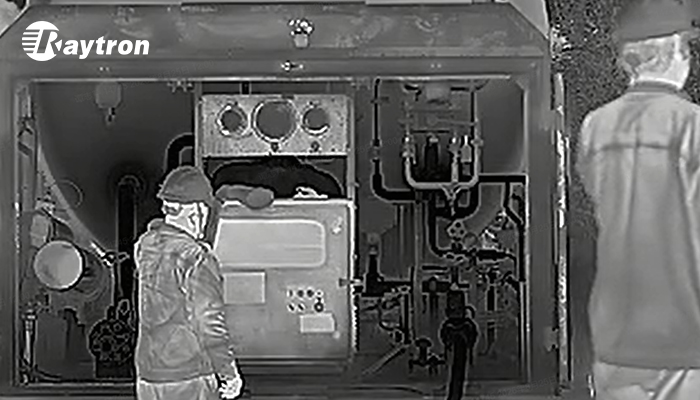
MWIR sensor visualizing gas emissions from a nitrogen tank
This is the most widely adopted uncooled thermal imaging camera sensor route. It requires no cryocooler. In many cases it needs no thermoelectric cooler (TEC) either. Power it on and it operates. System power is typically under 1 W.
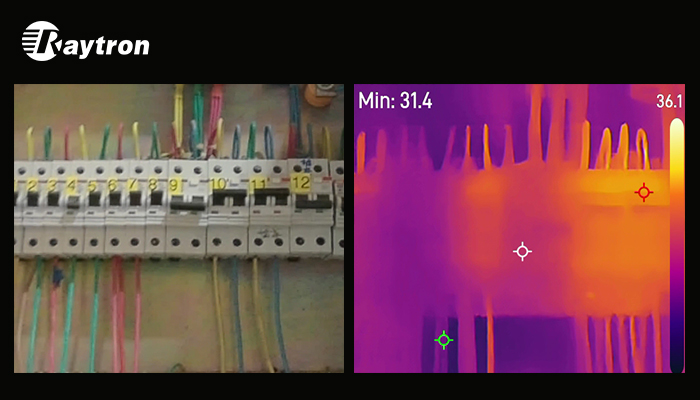
LWIR visible-thermal comparison with infrared temperature readings
The sensor absorbs infrared radiation, experiences a minute temperature rise, and converts it into an electrical signal through resistance change in the thermosensitive material. Typical NETD values for uncooled LWIR sensors are often in the 30–50 mK range, which is lower than cooled MWIR, yet it is sufficient for security surveillance, automotive night vision, and industrial inspection of ambient-temperature targets.
Two material paths dominate today: VOx and a-Si. VOx offers high sensitivity and low noise, while a-Si provides strong compatibility with CMOS manufacturing and scalable production. The choice depends on the required balance of performance and manufacturing efficiency.
Apply Wien’s law: ambient biological and environmental targets point to the LWIR sensor; high-temperature engines and industrial equipment point to the MWIR sensor; reflected-light and laser applications point to the SWIR sensor.
Improvements in NETD correlate positively with gains in detection range. Under typical engineering conditions, lower NETD delivers measurable performance benefits for long-range, low-contrast detection. Cooled MWIR sensors, which can achieve NETD values below 20 mK in high-performance systems, are therefore often preferred for demanding long-range applications where high sensitivity is critical. For medium- to short-range general surveillance, uncooled LWIR sensors with typical NETD values around 30–50 mK can provide a practical balance of sensitivity, size, power consumption, and cost.
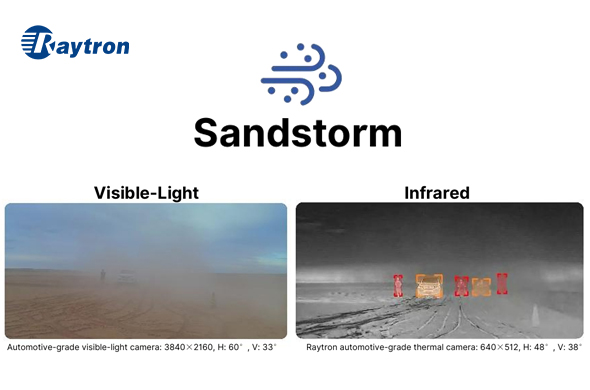
Under typical atmospheric conditions, LWIR (8–14 μm) can offer better transmission than MWIR in environments with higher humidity, smoke, or dust, although attenuation varies with wavelength and environmental conditions. Heavy rain can degrade the performance of both MWIR and LWIR systems.
Smaller pixels are not automatically superior. As pixel pitch decreases, the optical system must provide sufficient resolving power to take advantage of the higher spatial sampling. If the lens cannot resolve the additional detail, reducing pixel size may not translate into higher system resolution. In long-focal-length systems, optical performance, detector sensitivity, pixel pitch, and aperture should therefore be considered together rather than optimizing for pixel size alone.
The cryocooler can become a major contributor to the power consumption, size, weight, and mechanical complexity of a cooled MWIR system. Its operational lifetime is usually 10,000–20,000 hours. This is the core driver of maintenance cost. For battery-powered handheld devices and other SWaP-constrained platforms, uncooled LWIR can offer a particularly practical balance of size, weight, power, and performance.
For a concise overview, the following quick-reference chart maps typical applications to the recommended infrared sensor band.
| Application | Recommended Band | Key Reason |
| Security / Automotive Night Vision | LWIR | Ambient targets, uncooled, low power |
| Industrial Equipment Inspection / Thermometry | LWIR | Wide temperature coverage, cost-effective |
| Engine Exhaust / High-Temperature Monitoring | MWIR | Strong high-temperature contrast, high sensitivity |
| Optical Gas Imaging (OGI) | MWIR (MCT) | Tunable bandgap, matches gas absorption peaks |
| Semiconductor Wafer Inspection | SWIR | Silicon penetration, high resolution |
| Laser Spot Analysis / Night-Vision Enhancement | SWIR | Reflected-light imaging, laser-compatible |
| Long-Range Thermal Imaging | MWIR/LWIR | Depends on target, optics, atmospheric conditions, and detection criteria |
This article has mapped the core differences among SWIR, MWIR, and LWIR thermal imaging camera sensors. The SWIR sensor relies on reflected light and delivers the highest spatial resolution, serving semiconductor inspection and laser-related applications. The MWIR sensor offers exceptional sensitivity but requires deep cooling, making it ideal for high-temperature monitoring and gas imaging. The LWIR sensor operates without cooling, draws minimal power, and integrates flexibly—the dominant choice for ambient-target applications.
The three bands differ fundamentally in imaging mechanism, material system, cooling requirement, and use case. Selection must weigh target temperature, detection range, environmental conditions, and system constraints. Infrared sensor selection is a bottom-line physics decision for detector design. It sets the performance ceiling, optical supply chain, power architecture, and maintenance cycle of the entire system.
As a global leader in infrared thermal imaging, Raytron delivers advanced thermal imaging and AI-driven solutions across industrial safety, security, and automotive markets. Our portfolio spans uncooled LWIR, cooled MWIR, and SWIR sensors. With vertically integrated chip design and manufacturing capabilities, we supply OEMs and system integrators with high-reliability, high-performance infrared core components for more precise sensing and more efficient decision-making.